

Business secrets from unsuccessful developments sounds like a contradiction – why protect something that has not been successful.
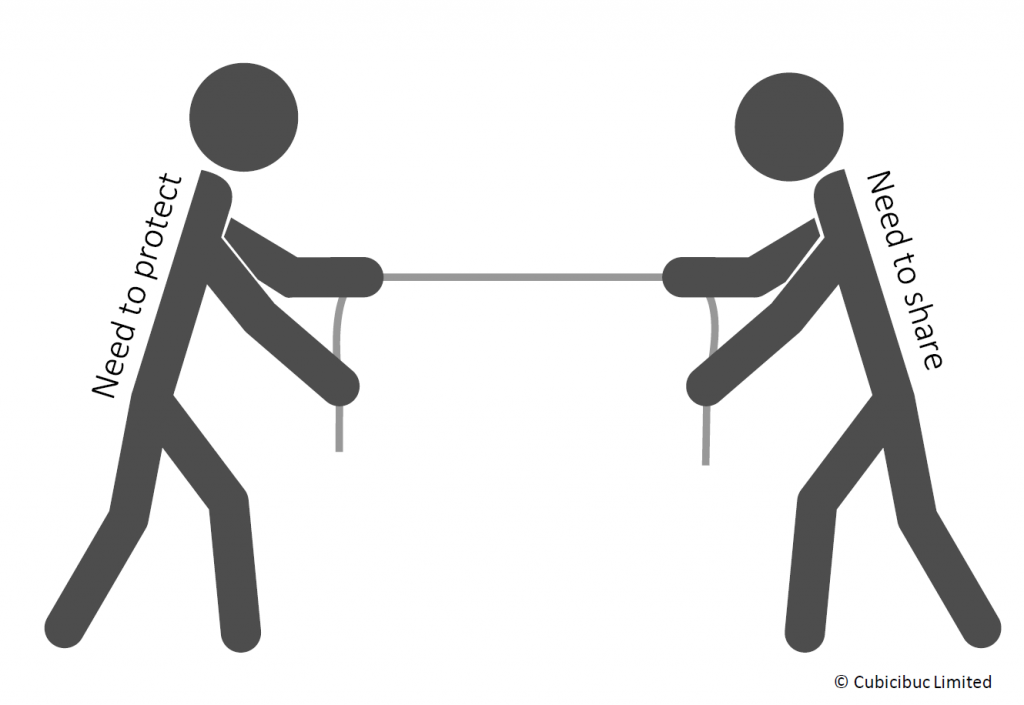
With all forms of intangible assets organisations are faced with the tension of the need to protect those assets for themselves vs the need to share the assets with others.
While “Trade Secret” would usually be rigorously (legally) defined as a piece of information that passes the three following tests:
- It is not known to the professional sector or field of activity concerned. (i.e., it is not naturally or effortlessly accessible to stakeholders of the trade who would, in the course of their professional duty, want or need to access it)
- It is valuable in view of the fact that the information is secret. (i.e., it can be assigned a commercial value, explicit or latent)
- The company endeavours to keep it secret by taking reasonable protective measures. (i.e., its legitimate owner has already enforced specific protection measures to preserve secrecy.)
A more broad term of “Business Secret” can be defined as any information that:
- is not, in itself or in the exact configuration and assembly of its elements, generally known or easily accessible to persons familiar with this type of information because of their sector of activity
- has commercial value, actual or potential, by virtue of its secrecy
- is the subject of reasonable protective measures by its legitimate holder, given the circumstances, to maintain its secrecy.
If a piece of information meets all three of these criteria, it could / should be considered a business secret. * the second test can be modified to “it must not be known to anyone outside the organisation in the absence of suitable legal obligations such as NDAs”.
For the purposes of this discussion, we take the broader definition, and particularly think about know-how, data and the softer forms of IP that are typically much harder to identify, protect and manage.
Business secrets from unsuccessful developments
Not all R&D is successful resulting in development activities that are followed through to products or services. Depending on technology and industry, a ratio of around 1:10 for successful R&D commercialisation is common. This figure would suggest that for every one project that successfully makes it “out of R&D” there are ten others that are not pursued – we use “negative results” as short-hand for those projects that are not continued.
While the ten “negative results” may not have value to the organisation, they may have value to others.
Consider a direct competitor, looking to duplicate the successful solution. With no prior knowledge of the nine other projects that were explored by the original organisation it is fair to assume that given a similar set of capabilities they too might require ten iterations before finding the successful case.
Alternatively, one of the ten may not be the most optimal solution, but may still be a viable and commercially deployable option. If “dropped” before patenting such a solution may be open to exploit.
It follows then negative results should be treated at least as business secrets / trade secrets.
Such negative results may simply be the definition of the set of tests that were ran prior to finding a successful outcome; they may be data used to train unsuccessful candidate solutions; or they may be first draft design documents or product ideas.
Business Secret Management – Life cycle
Business Secret Management follows a simple four stage life-cycle:
- Audit – Identify what you have
- Categorise – Categorise it according to established rules
- Control – Control access and usage by people and processes; control through policies (Document management and HR) and systems (IT)
- Monitor – Monitor the usage in products / services and any leakage by people or processes
However, the most important factor in managing business secrets is building awareness in the organisation of the importance of the secrets and the value to the business.
Awareness and culture building
The best solution for an organisation is to establish a culture that understand the importance of its secret and confidential information. This takes time, and requires awareness building at all levels and within all functions in the business.
Strong culture is typically built on myth and legend.
Trade secrets such as the Coca-Cola or KFC recipe are so widely understood that they have become part of wider culture outside of their parent organisations.
Processes, policies and structural considerations
Topics for a separate post, but business secret management should consider:
- IP Audits and IP Health checks
- Creating an IP register (Intangible Asset Register)
- A structured understanding of the linkages between the IP, products and services
- HR policies and processes to support IP management
- IT solutions and policies, including appropriate compartmentalisation control, audit and reporting
- Document / Information Classification and control
- Big Visible Signs (BVSs)
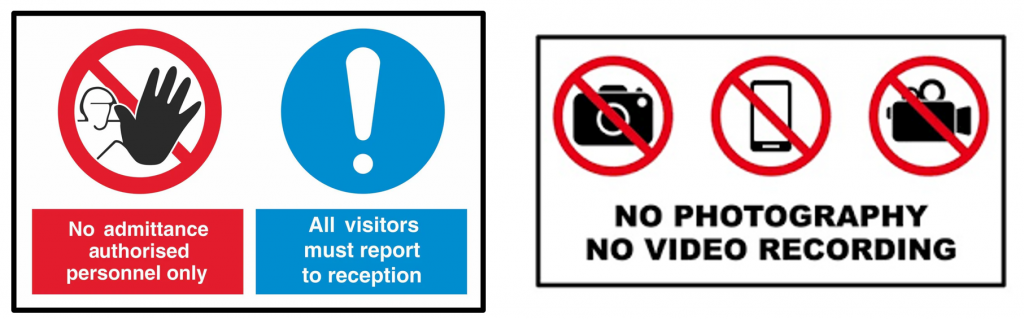
For managing business secrets from unsuccessful developments, it is important to stress, both internally and with external partners and contractors, the importance of all forms of intangible assets and their potential value to external parties.
Great Intellectual Property management protects value
Cubicibuc supports its clients by:
- providing confidential and independent strategic advice
- performing commercial and technical IP audits, and IP health checks
- supporting commercial negotiation, M&A / tech transfer, licensing and litigations
We work with businesses ranging from smaller start-ups to mature multinationals; from early stage invention capture through to exploitation and monetisation of IP assets.
Cubicibuc provides expert IP support, patent evaluation, landscaping and expert witness in a range of technologies including telecommunications and consumer electronics, automotive, and semicon.
To discuss how Cubicibuc’s expertise can help your organisation manage and exploit IP, please contact us now